Yesterday spent time in the annual garden putting in plants purchased from a local garden center. It is the time of year to think about the garden, and nature. That brings to mind the One-Straw Revolution.

Introduction
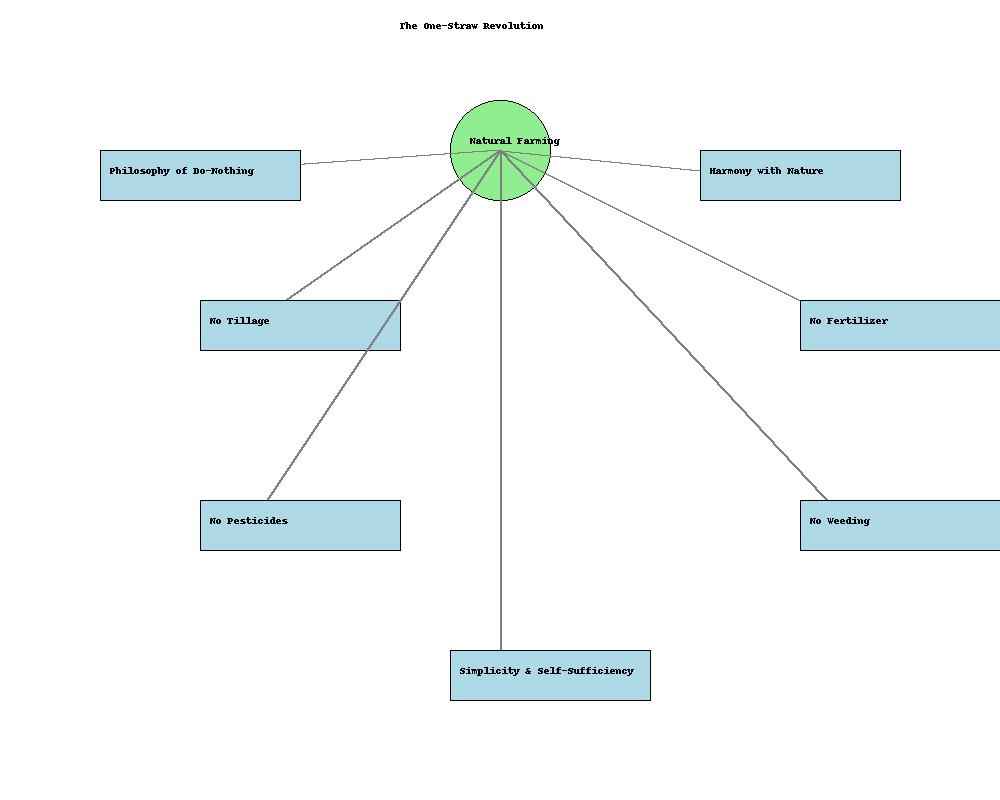
Masanobu Fukuoka’s The One-Straw Revolution presents a compelling case for what he calls “natural farming”—a no-till, organic method that requires minimal human intervention and mimics natural ecosystems. This summary focuses on the practical suggestions Fukuoka offers for farmers, gardeners, and individuals seeking a simpler, more harmonious way of living with the land.
Core Practices of Natural Farming
1. No Tillage (No Plowing or Turning of the Soil)
- Let the soil structure remain intact; it already contains layers and microbial life that are self-sustaining.
- Earthworms and plant roots naturally till the soil.
- Tillage leads to nutrient loss and soil degradation over time.
2. No Fertilizer
- Green manure crops (like clover) can enrich the soil naturally.
- Decaying plant matter and nitrogen-fixing species maintain soil fertility.
- Use straw and plant residues as surface mulch.
3. No Chemical Pesticides or Herbicides
- Diverse plantings increase natural resistance to pests.
- Let weeds grow to an extent—they protect soil and encourage biodiversity.
- Birds, insects, and other wildlife form a balanced pest control system.
4. No Weeding by Tillage or Herbicides
- Ground cover crops and natural mulching suppress weeds.
- Minimal hand weeding may be necessary, but weeds are part of the ecosystem.
- Use white clover or fast-growing rice as living mulch.
5. No Pruning (for Trees)
- Pruning disturbs the natural growth form of trees.
- Allow trees to develop their natural shape and resilience.
- Excessive pruning weakens the plant and increases disease risk.
Seasonal Techniques and Crop Rotations
- Rice-Wheat-Barley Rotation: Broadcast barley over maturing rice; scatter rice into barley stubble.
- Seed Balls: Encase seeds in clay to protect them from birds and drying out; scatter directly on soil.
- Timing with Nature: Observe and align planting with natural indicators (e.g., blooming of wildflowers, rainfall patterns).
Soil and Water Management
- Minimal Irrigation: Let rainfall dictate watering cycles.
- Cover Crops: Retain moisture and prevent erosion.
- Natural Terracing: Use the shape of the land to slow water runoff.
Practical Garden and Lifestyle Advice
- Grow Your Own Food: Small-scale, diverse home gardens can meet most nutritional needs.
- Eat Seasonally and Simply: Emphasize unrefined grains, vegetables, and minimal processing.
- Live in Rhythm with Nature: Avoid mechanized farming and industrial food chains.
Philosophical and Practical Integration
Fukuoka argues that the path to sustainable living starts with humble observation. Farmers are not engineers but participants in nature. He suggests that the less we do, the closer we align with the natural order—and paradoxically, the more productive and fulfilling our farming becomes.
Conclusion
Fukuoka’s approach is radical yet deeply rooted in observation and tradition. The practical suggestions he provides challenge modern agricultural norms but offer a resilient, ecological, and spiritual alternative. His core lesson: “Do nothing” farming is not about laziness, but about trust in nature’s wisdom.
 DeAngelis Family Tech Interests