A few years back, I enjoyed making mead. My son, who also makes mead, suggested using hyssop in my mead. I also noticed at the store of a Bucks County PA distillery, hyssop-infused bourbon. I tried unsuccessfully for a few years to grow it, but last year I finally got it to grow. I did not end up using it last year, but to my surprise, it came up on its own this year.
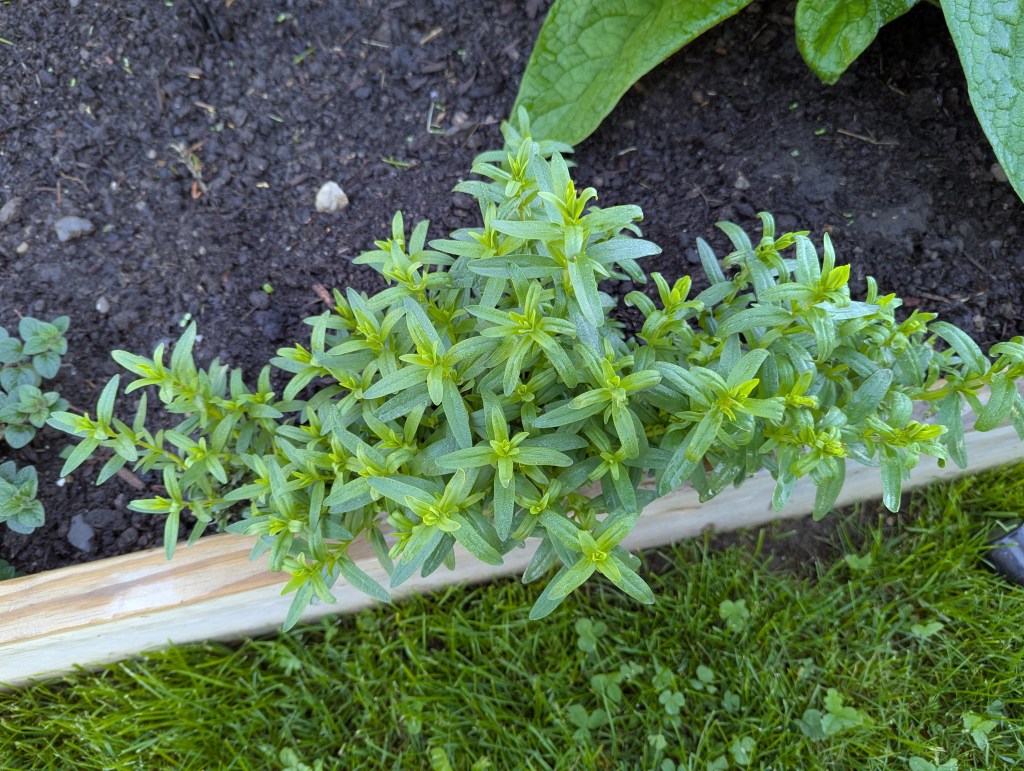
I no longer make mead. But since the plant volunteered this year, I am interested in exploring uses for it. Here is some preliminary research.
Hyssop (Hyssopus officinalis) is a lesser-known gem among garden herbs—fragrant, hardy, and steeped in history. With its striking purple-blue flowers and its place in both ancient rituals and modern herbal medicine, hyssop offers beauty and benefit in equal measure.
A Brief History
Hyssop has been revered for thousands of years. It’s mentioned several times in the Bible, often symbolizing purification:
“Purge me with hyssop, and I shall be clean” (Psalm 51:7)
While the biblical “hyssop” may have referred to another plant, Hyssopus officinalis has been used medicinally throughout the Mediterranean and Middle East for centuries.
Botanical Profile
- Scientific name: Hyssopus officinalis
- Family: Lamiaceae (mint family)
- Hardiness zones: 3–10
- Growth: Woody perennial, 1.5–2 feet tall
- Sunlight: Full sun
- Soil: Well-drained, moderately rich soil
- Pollinators: Attracts bees, butterflies, and hummingbirds
Culinary and Medicinal Uses
🌿 Culinary
Hyssop has a strong, slightly bitter taste—reminiscent of mint and oregano. Use fresh leaves sparingly in:
- Soups and stews
- Herbal teas
- Liqueurs (it’s a traditional ingredient in Chartreuse)
🌱 Medicinal
Traditionally, hyssop has been used as:
- A remedy for coughs and colds
- A digestive aid
- An anti-inflammatory in salves and poultices
⚠️ Note: Hyssop essential oil is highly concentrated. It should not be used by pregnant women or those with epilepsy.
🧑🍳 Simple Recipe: Hyssop-Infused Honey
This herbal honey pairs beautifully with tea, cheese, or fresh bread.
Ingredients:
- 1 cup raw honey
- 2 tbsp fresh hyssop leaves (or 1 tbsp dried)
Instructions:
- Warm the honey slightly (do not boil).
- Stir in hyssop and let steep for at least 24 hours.
- Strain and store in a glass jar. Use within 3 months.
Growing Hyssop at Home
- Start from seed indoors or transplant in early spring.
- Prune regularly to encourage bushy growth.
- Harvest before flowering for peak flavor.
- Combine with lavender, rosemary, and sage in pollinator-friendly beds.
Final Thoughts
Hyssop bridges the worlds of the sacred and the practical—a symbol of cleansing and an herb of comfort. Whether you grow it for beauty, bees, or breath, hyssop brings a touch of the ancient into your everyday.
 DeAngelis Family Tech Interests